
Global Business Districts: Connecting Ecosystems, Creating Opportunities
City leaders from around the world gathered in Beijing for the 2026 Beijing CBD Forum to discuss the future of urban economic development, innovation and international cooperation. Alongside governments, international organisations and multinational companies, members of the Global Business Districts Innovation Club attended the Forum as speakers, panellists and delegates, sharing their experience and contributing to discussions on the transformation of business districts.
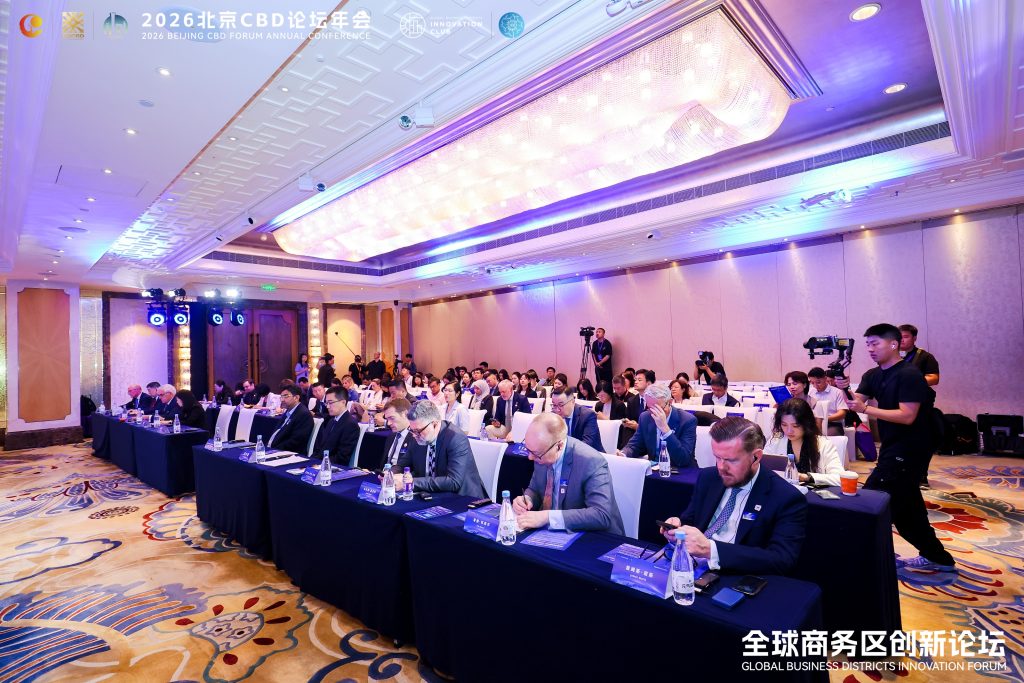
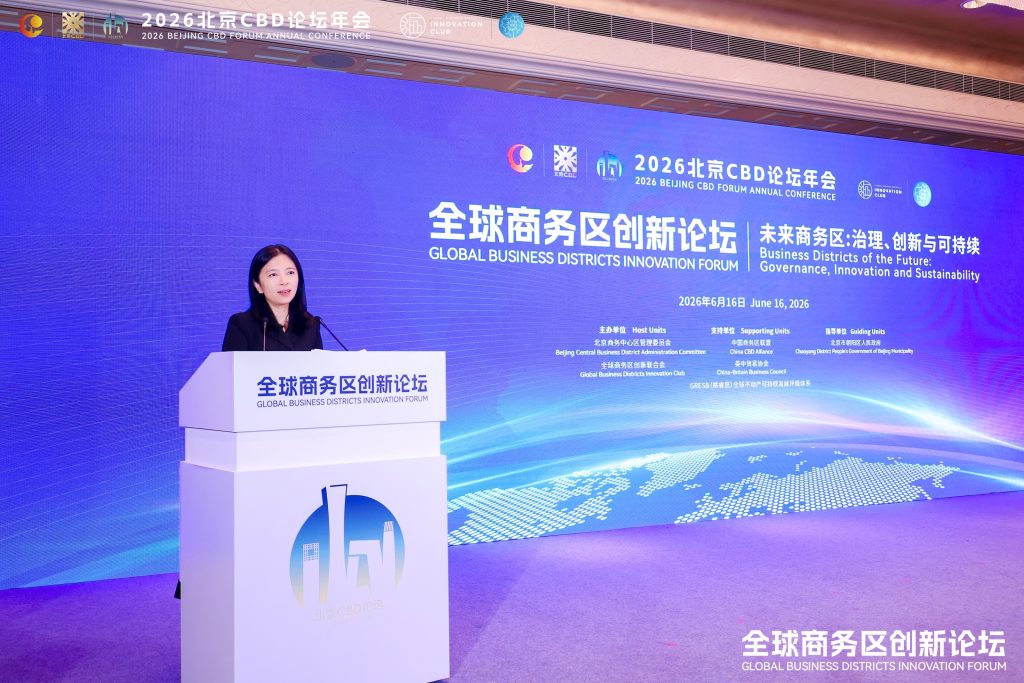
The 2026 Beijing CBD Forum demonstrated how rapidly the role of global business districts is evolving. Once viewed primarily as concentrations of office towers and corporate headquarters, leading business districts are increasingly positioning themselves as platforms for innovation, international cooperation, talent attraction, and economic and climate resilience.
Held under the theme “Openness and New Quality Productive Forces: Global Transformation and China’s New Chapter,” this year’s Forum gathered representatives of governments, international organizations, multinational corporations, business associations and global business districts from more than thirty countries and regions. With nearly 10,000 registered participants and almost forty events, the Forum confirmed its position as one of the most influential international gatherings focused on urban economic development and business district transformation.
For members of the Global Business Districts Innovation Club, the Forum offered a valuable opportunity to reflect on how business districts adapt to a changing global environment.
A New Generation of Business Districts
One message emerged consistently throughout the discussions: business districts can no longer rely solely on real estate performance.
The most successful districts are becoming integrated ecosystems that combine:
- Economic development
- Innovation and entrepreneurship
- International investment attraction
- Talent retention
- Cultural programming
- Urban experience
- Social responsibility
- Sustainability objectives
This shift was particularly visible in discussions around China’s concept of “new quality productive forces”, an approach focused on innovation-driven growth, advanced technologies, digital transformation and higher-value economic activity. While the terminology may be specific to China, the underlying challenge is global: how can business districts remain competitive in an economy increasingly shaped by technology, talent and knowledge rather than simply physical infrastructure?
Business Districts as International Gateways
Another important theme was the growing diplomatic and international role of business districts.
The Forum brought together four groups of stakeholders that rarely meet on the same platform:
- International organizations
- Diplomatic representatives
- Business associations
- Multinational corporations
This reflects a broader trend visible across many GBD Innovation Club members. Business districts are increasingly acting as international gateways for their cities, facilitating trade, investment and partnerships that extend far beyond their physical boundaries.
In a period marked by geopolitical uncertainty and economic fragmentation, business districts may become important connectors between markets, industries and institutions.
From Networking to Operational Cooperation
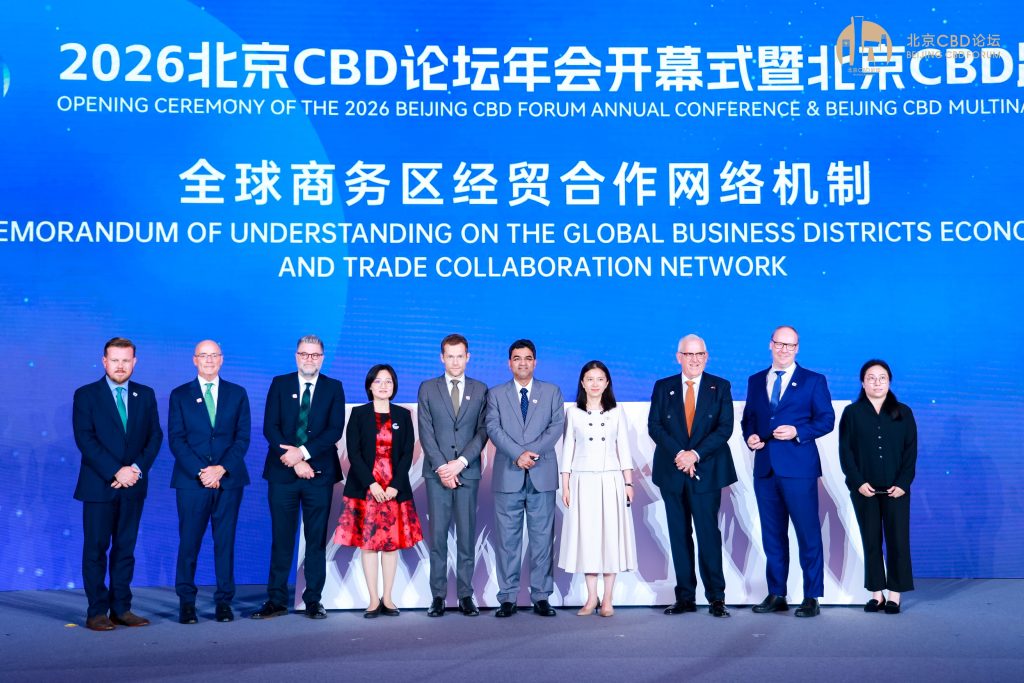
One of the most significant developments announced during the Forum was the launch of the Global Business District Economic and Trade Cooperation Mechanism.
While international business district cooperation has historically focused on dialogue and knowledge exchange, this initiative moves into a new phase: operational collaboration.
The mechanism aims to facilitate:
- Cross-border investment opportunities
- Project referrals
- Information sharing
- Joint promotion activities
- Business matching between districts
For global business districts, this represents an important evolution. The objective is no longer only to learn from one another, but also to create practical economic value through structured international cooperation.
The Growing Influence of the Global Business Districts Innovation Club
The Forum also highlighted the growing international recognition of the GBD Innovation Club. Founded in 2018 by Paris La Défense, Beijing CBD, Chicago Loop Alliance, Montréal Centre-Ville and Guangzhou Tianhe CBD, the Club has evolved into a global platform bringing together leading business districts, local and regional governments, and experts to exchange knowledge, foster collaboration and develop practical solutions for the better urban future.
Since assuming the rotating presidency in January 2025, Beijing CBD has continued to strengthen the Club’s international visibility and foster deeper cooperation among members.
The Forum also showcased the active contribution of Global Business Districts Innovation Club members throughout the program. Representatives from Paris La Défense, Waterfront BIA (Toronto), Liverpool BID, Primera Corporation (Central London), the Ministry of Housing and Urban Planning of Oman, and other member organisations participated as speakers, panelists and delegates, sharing international perspectives on urban transformation, investment attraction, innovation, sustainability and the future of business districts.
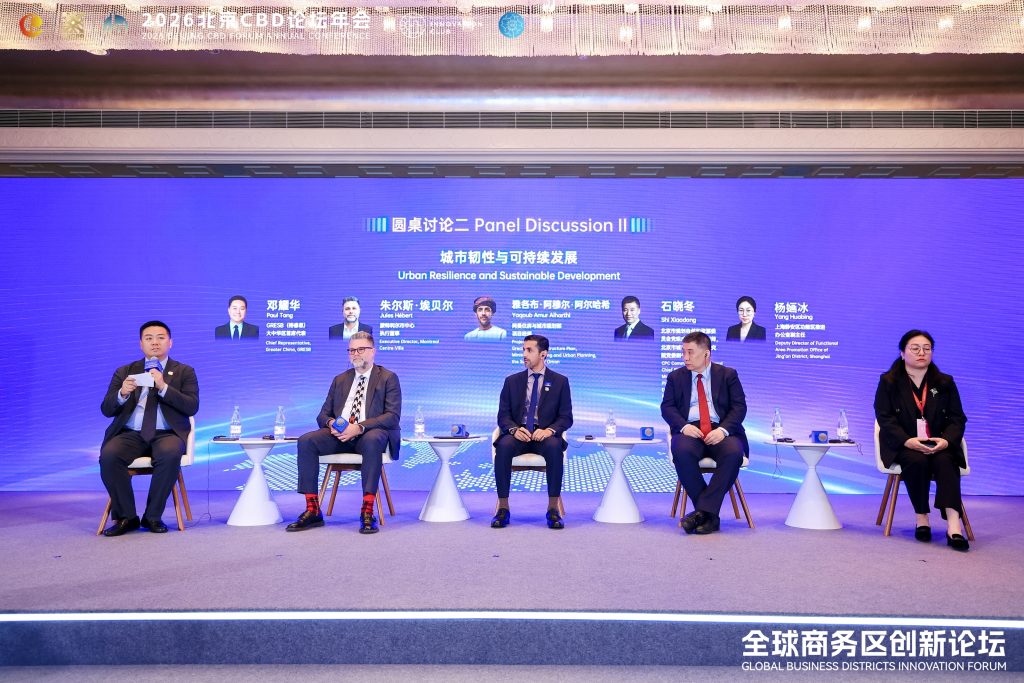
Their participation reflected not only the growing geographical diversity of the Club, but also its increasing role as a platform connecting leading business districts through practical dialogue, knowledge exchange and international cooperation.
Perhaps most importantly, the discussions confirmed that many challenges faced by business districts are becoming remarkably similar across geographies:
- Attracting investment in a competitive environment
- Adapting office markets to changing work patterns
- Integrating sustainability into economic development
- Leveraging artificial intelligence and digital technologies
- Creating vibrant mixed-use destinations
- Engaging younger generations in urban governance
Investing in the Next Generation
A particularly notable initiative was the launch of the Global Business District Youth Alliance and the presentation of the Global Business District Youth Beijing Initiative.
Young professionals and students from countries including China, France, Morocco etc contributed research and recommendations on business district development and sustainability. Their participation reflects a growing recognition that future urban development will depend not only on infrastructure and capital, but also on talent, inclusion and civic engagement.
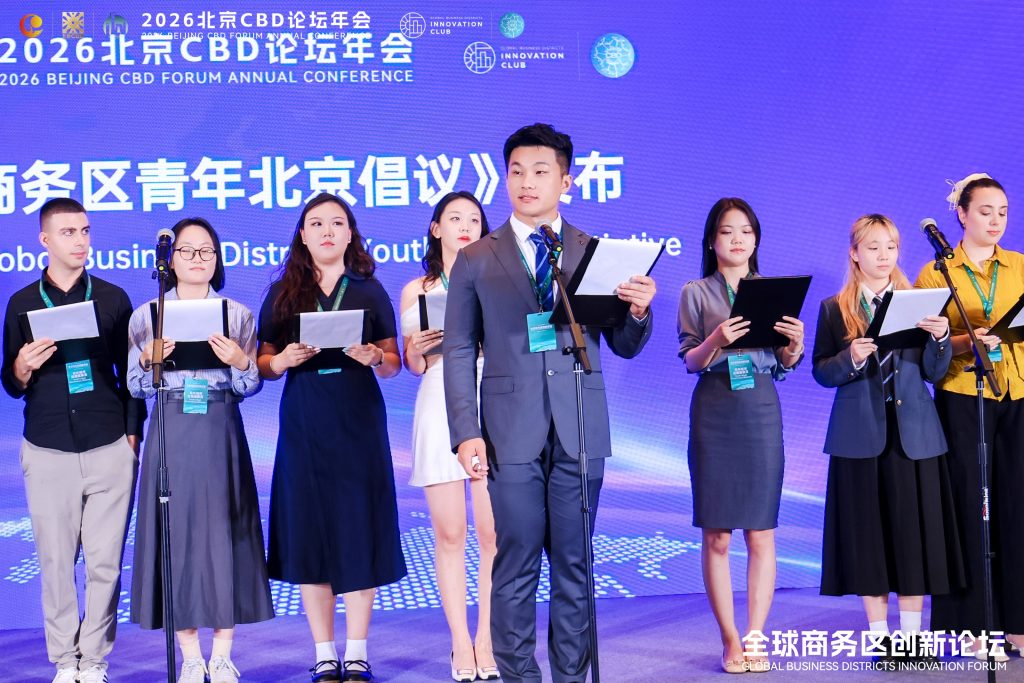
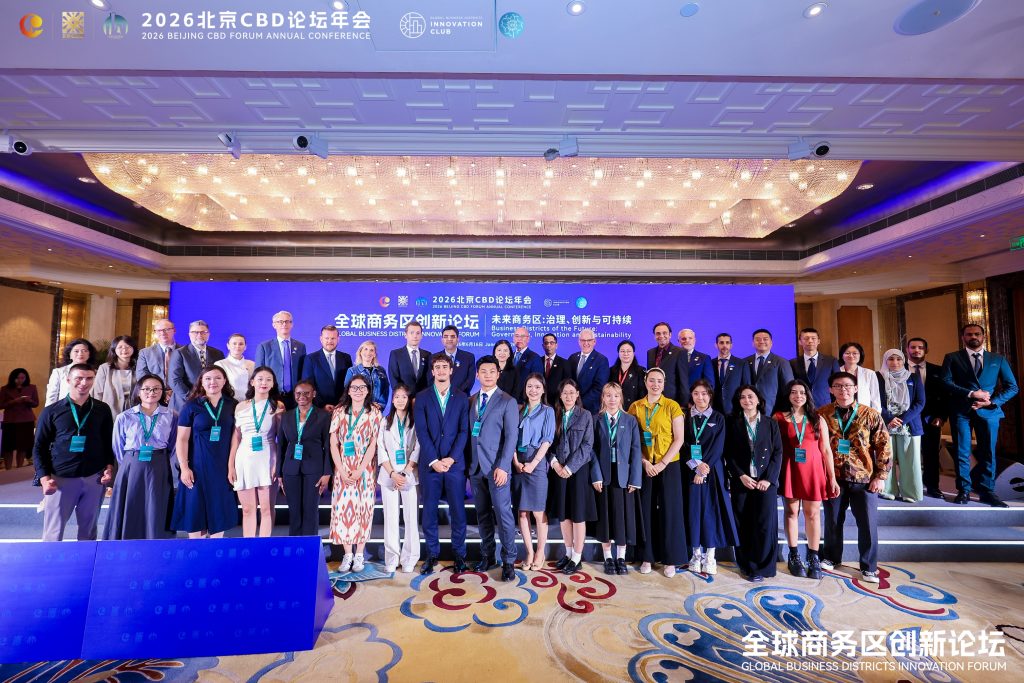
For business districts worldwide, this raises an important question: how can the next generation become active participants in shaping urban economic centres rather than simply users of them?
Looking Ahead
The 2026 Beijing CBD Forum illustrated a broader transformation taking place across the world’s leading business districts.
The future GBD is no longer simply a concentration of office buildings. It is a platform for innovation, a gateway for international cooperation, a testbed for new technologies, a destination for culture and art, and increasingly, a laboratory for urban governance.
As cities continue to navigate economic transition, technological disruption and global uncertainty, stronger cooperation between global business districts will play an increasingly important role in sharing knowledge, accelerating innovation and developing solutions to common urban challenges.
The conversations held in Beijing suggest that the next chapter of business district development will be shaped through collaboration, with districts learning from one another, building long-term partnerships and working together to create more resilient, attractive and future-ready urban centres.
Across GBD Innovation Club network, that future is already taking shape through international cooperation, shared knowledge and long-term partnerships.