
Seoul Roadshow 2026: Gangnam's Vision for the Future of Global Business Districts
Following the 2026 Beijing CBD Forum, members of GBD Innovation Club travelled to Seoul for the second stage of the Club’s annual Roadshow. Supported by Beijing CBD and osted by Gangnam District, the programme brought together representatives from leading GBDs across Asia, Europe, North America and the Middle East to exchange ideas, explore Seoul’s approach to urban development and strengthen international cooperation.
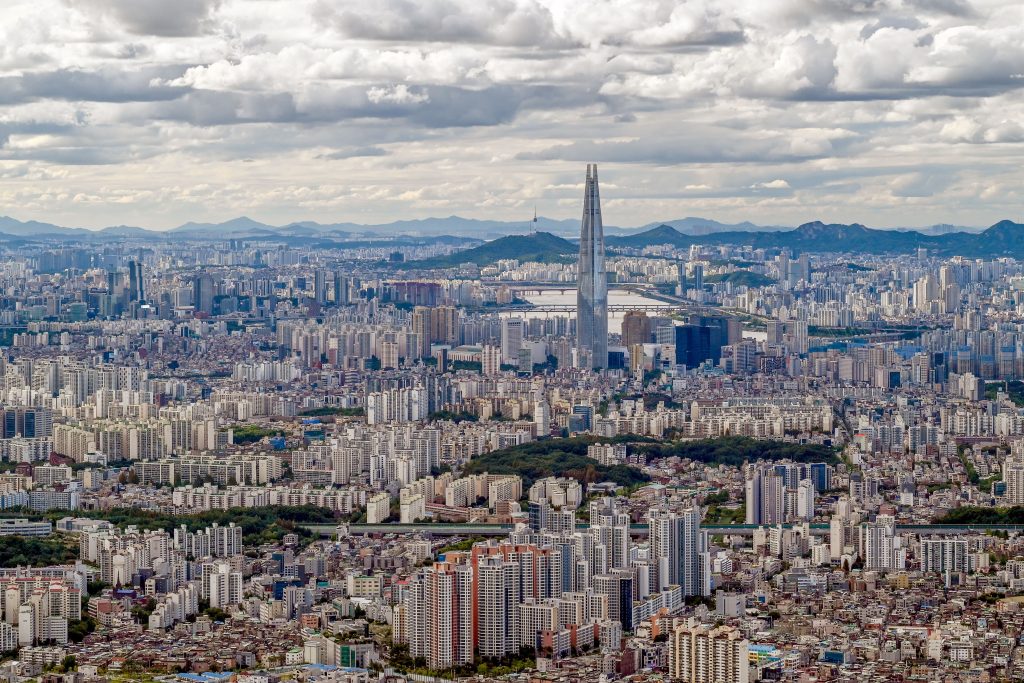
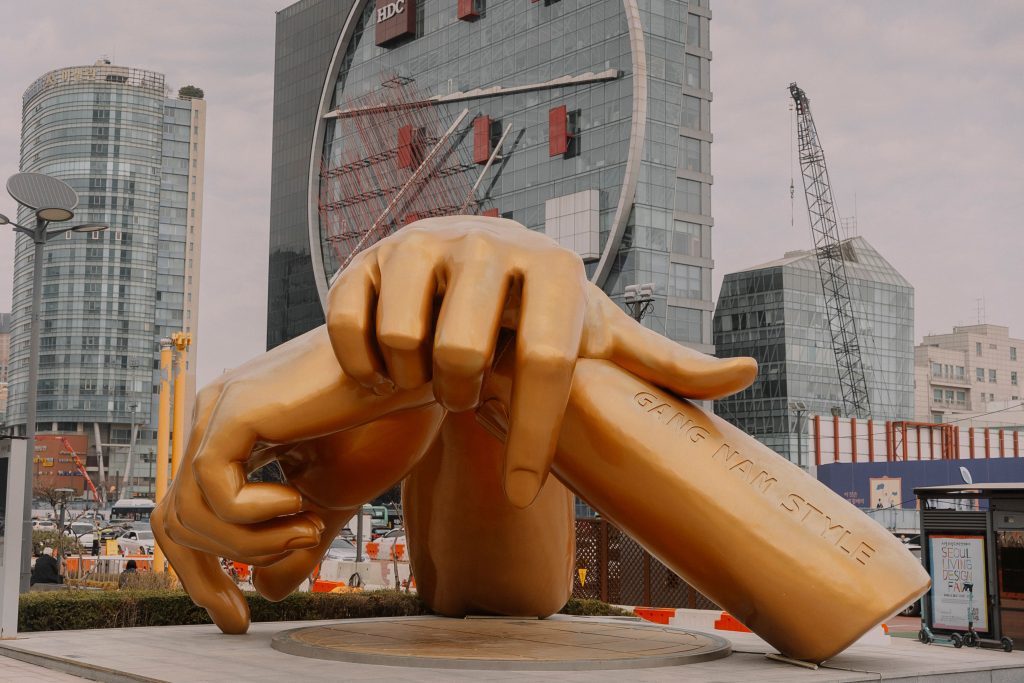
The international delegation included the Ministry of Housing & Urban Planning of the Sultanate of Oman, represented by Dr. Mohammed bin Ali Al-Mutawa, Undersecretary of Urban Planning; Ibrahim Al Amri, Director General of Finance and Human Resources; Eng. Ya’qoub bin Amer Al Harthi, Project Director of the Greater Muscat Structure Plan; and Lamya Al Bahri, Architect and Urban Planning Professional within the Greater Muscat Structure Plan team; Michael Edwards, Senior Advisor and Julia Solodova, Project Manager, both from GBD Innovation Club; Pierre-Yves Guice, CEO and Aude Laurent, Head of International and Local Development, both from Paris La Défense; Tim Kocur, Executive Director of The Waterfront BIA (Toronto, Canada); James North, Director of Public Affairs and International of Primera Corporation (Central London, United Kingdom); Jules Hébert, CEO of Montréal centre-ville (Montréal, Canada); together with representatives from Beijing CBD.
More than a study visit, the Roadshow reflected the GBD Innovation Club’s mission: creating opportunities for peer learning between business districts facing increasingly similar urban, economic and technological challenges.
Gangnam: Planning Beyond the Next Decade
The programme began with the GBD Innovation Club Gangnam Exchange Meeting, bringing together Club members, representatives from Gangnam District and the Korea International Trade Association (KITA).
Following opening remarks by Michael Edwards, participants heard a presentation from representatives of Beijing CBD before Dr. Kim Inhee, Master Planner of Gangnam District, introduced one of the most ambitious urban strategies currently being developed in Asia: Gangnam Vision 2070.
Rather than presenting individual development projects, Dr. Kim outlined a vision for how Gangnam intends to evolve over the next fifty years. His presentation demonstrated that the district is preparing not only for economic growth, but also for demographic change, climate adaptation, technological transformation and new ways of working. Instead of treating mobility, public space, economic development, sustainability and innovation as separate topics, the Vision 2070 framework integrates them into one long-term strategy.
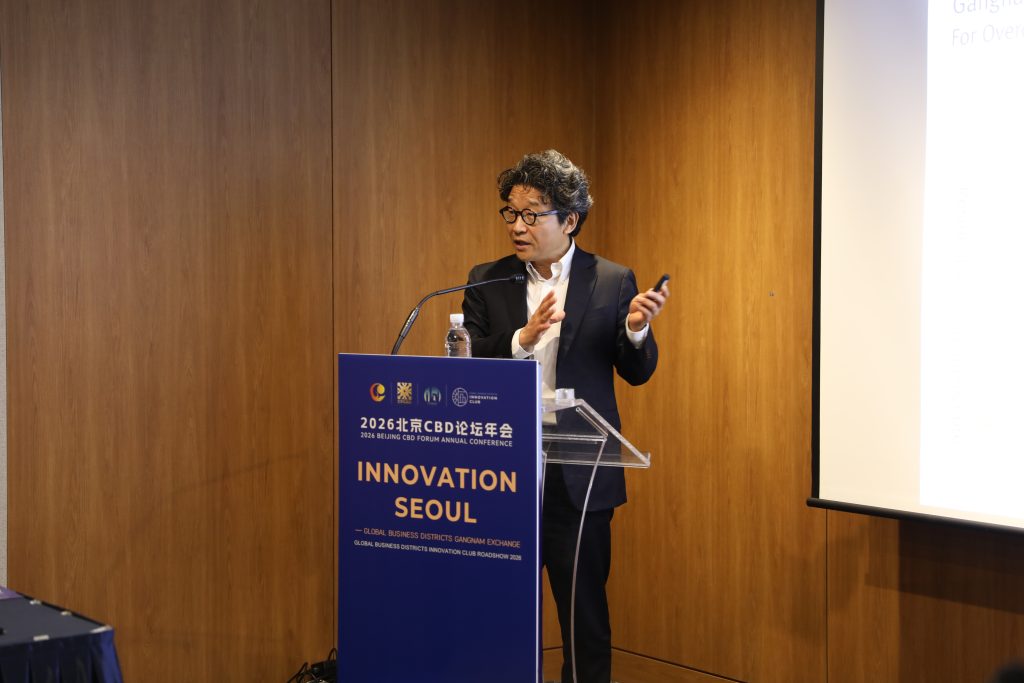
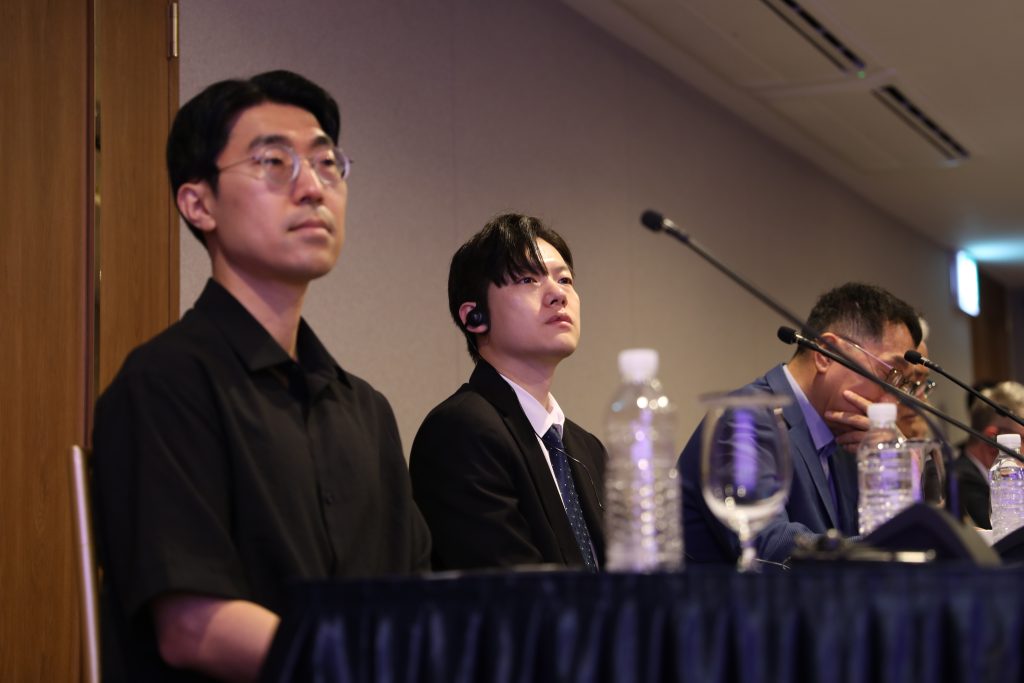
One of the concepts underpinning this vision is Seoul’s ambition to create a more people-centred “10-minute city”, where residents, employees and visitors can access workplaces, services, culture, green spaces and leisure within a short walk or public transport journey. Rather than separating business districts from everyday urban life, the objective is to create mixed-use neighbourhoods that remain active, accessible and attractive throughout the day while reducing unnecessary travel and improving quality of life.
For many members of the delegation, this long-term perspective was particularly inspiring. While many urban projects are developed within political or investment cycles, Gangnam’s approach looks several decades ahead, providing a coherent framework capable of guiding future decisions while remaining flexible enough to adapt to changing technologies and economic conditions.
At the heart of this strategy lies the Global Business Center (GBC), one of Korea’s most significant urban development projects.
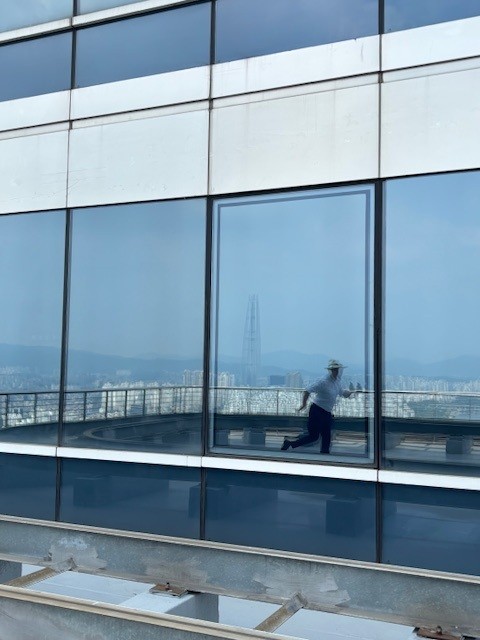
Presented from the rooftop of the ASEM Tower overlooking the future development site, the project illustrates how a major investment can become much more than a landmark building. The GBC is designed to reinforce Gangnam’s international competitiveness while improving the surrounding urban environment through better public spaces, stronger pedestrian connections, enhanced accessibility and a richer mix of business, cultural and public functions.
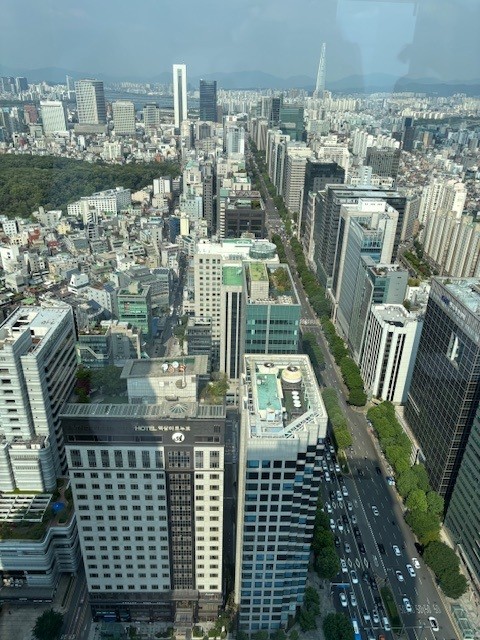
The presentation also highlighted an important shift in urban thinking. The success of a global business district can no longer be measured solely by the number of office towers it delivers. Increasingly, attractiveness depends on creating complete urban ecosystems where business, innovation, culture, mobility and quality public spaces work together to bring more companies, talent, investment and visitors.
Different Cities, Shared Challenges
The thematic exchange session, moderated by Julia Solodova invited each delegation to introduce its organisation and share one of the key priorities shaping its business district today.
Despite representing different governance models and urban contexts, participants quickly recognised that many of the challenges they face are remarkably similar.
Aude Laurent, Paris La Défense discussed the transformation of Europe’s largest purpose-built business district and the challenge of adapting mature office markets to changing workplace expectations while reinforcing the district’s international attractiveness.
Tim Kocur, The Waterfront BIA, shared Toronto’s experience in activating public spaces along the waterfront and creating destinations where placemaking, culture and programming contribute directly to economic development.
James North, Primera Corporation, reflected on the opportunities and complexities of managing one of Central London’s most dynamic business districts, balancing commercial activity, heritage, tourism and residential life within a dense urban environment.
Jules Hébert, Montréal centre-ville, presented Montréal’s collaborative approach to downtown revitalisation, highlighting the importance of strong partnerships between the public and private sectors to support businesses and improve the quality of the urban environment.
Representing the Ministry of Housing & Urban Planning of the Sultanate of Oman, Ya’qoub Al Harthi shared the ambitions behind the Greater Muscat Structure Plan and discussed how long-term planning can guide the development of emerging metropolitan centres while preserving local identity.
Representatives from Beijing CBD shared experiences from China’s leading business districts, where innovation, international cooperation, digital transformation and integrated urban development continue to shape future growth.
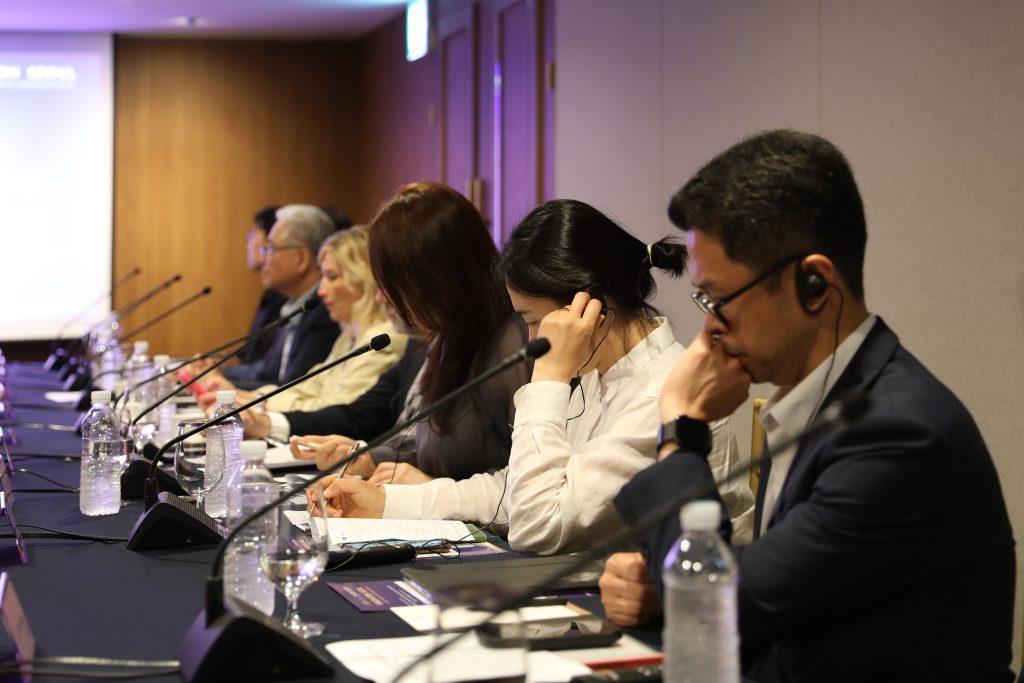
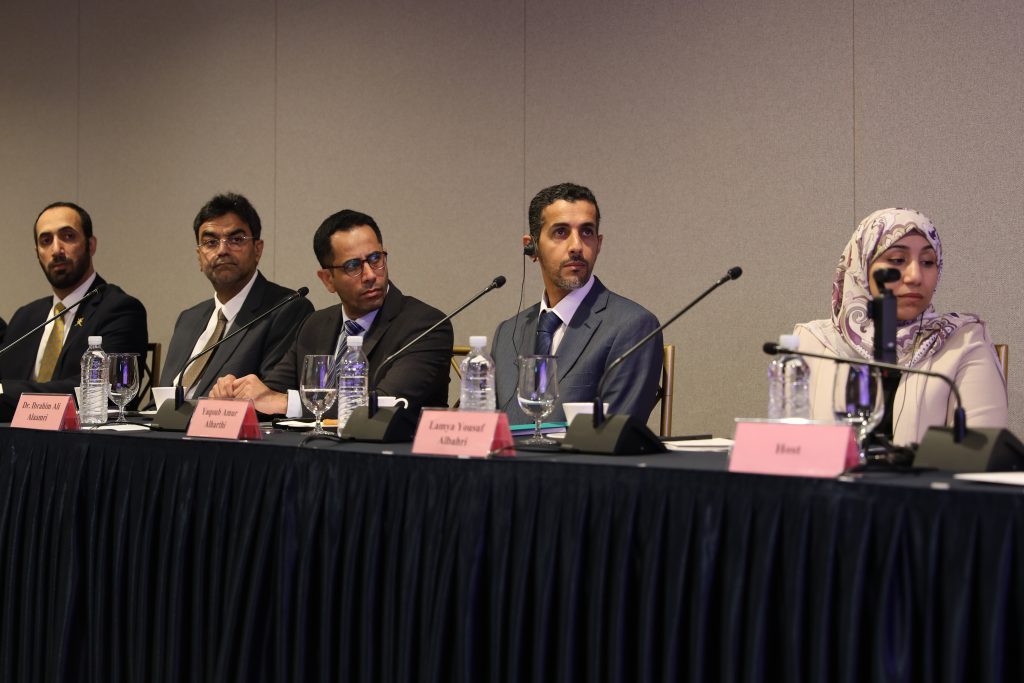
Although every city represented around the table has its own identity, governance and development model, the discussions revealed a remarkable convergence of priorities.
- ⇒ How can business districts remain competitive in the era of hybrid work?
- ⇒ How can they continue attracting investment while improving quality of life?
- ⇒ What role should artificial intelligence play in managing urban environments?
- ⇒ How can sustainability become a driver of economic competitiveness?
- ⇒ How can business districts strengthen their international profile while preserving their local identity?
Rather than searching for universal answers, the exchange demonstrated the value of peer learning. Every district may follow its own path, yet the questions they face (and increasingly the solutions they develop) are becoming global.
Innovation Is an Ecosystem
Innovation remained a central theme throughout the Roadshow. On the second day, the delegation attended NextRise 2026, Korea’s largest startup and innovation exhibition, jointly organised by KDB Bank and the Korea International Trade Association (KITA).
Bringing together thousands of startups, investors, multinational corporations, universities and public institutions from around the world, the event offered a comprehensive overview of one of Asia’s most dynamic innovation ecosystems. Artificial intelligence dominated this year’s edition, alongside robotics, digital healthcare, climate technologies, advanced manufacturing and smart mobility. Yet perhaps the most valuable lesson extended beyond technology itself. NextRise illustrated how innovation flourishes when entrepreneurs, investors, researchers, corporations and public institutions operate within the same ecosystem rather than in isolation. Large companies were actively seeking partnerships with startups, universities showcased applied research alongside venture capital funds, and public institutions demonstrated how strategic policy can accelerate innovation through collaboration.
For global business districts, this observation carries an important implication. Their role is evolving from simply hosting innovative companies to creating environments where ideas, talent, investment and entrepreneurship naturally connect. In that sense, innovation is no longer just about technology, it is about building ecosystems where collaboration can thrive.
COEX: More Than a Convention Centre
The Roadshow continued with a visit to COEX, one of Asia’s largest convention and exhibition centres and a cornerstone of Gangnam’s economic ecosystem.
Receiving millions of visitors each year, COEX illustrates how business districts are evolving beyond traditional office clusters into multifunctional destinations where business, culture, retail, hospitality and leisure reinforce one another.
Integrated with office towers, hotels, shopping facilities, cultural venues and one of Seoul’s busiest transport hubs, COEX has become much more than an events venue. It serves as a year-round platform for international conferences, trade fairs, exhibitions, business meetings and cultural activities, generating significant economic value while contributing to the vitality of the surrounding district.
One of its most recognisable landmarks is the Starfield Library, whose soaring bookshelves have become an attraction in their own right. Originally conceived as a public cultural space within the shopping complex, the library has gained even greater international visibility following its appearance in Netflix’s animated film KPop Demon Hunters, introducing millions of viewers to one of Gangnam’s most iconic interiors. It is a striking example of how architecture, culture and popular media can reinforce the identity and global appeal of a business district.
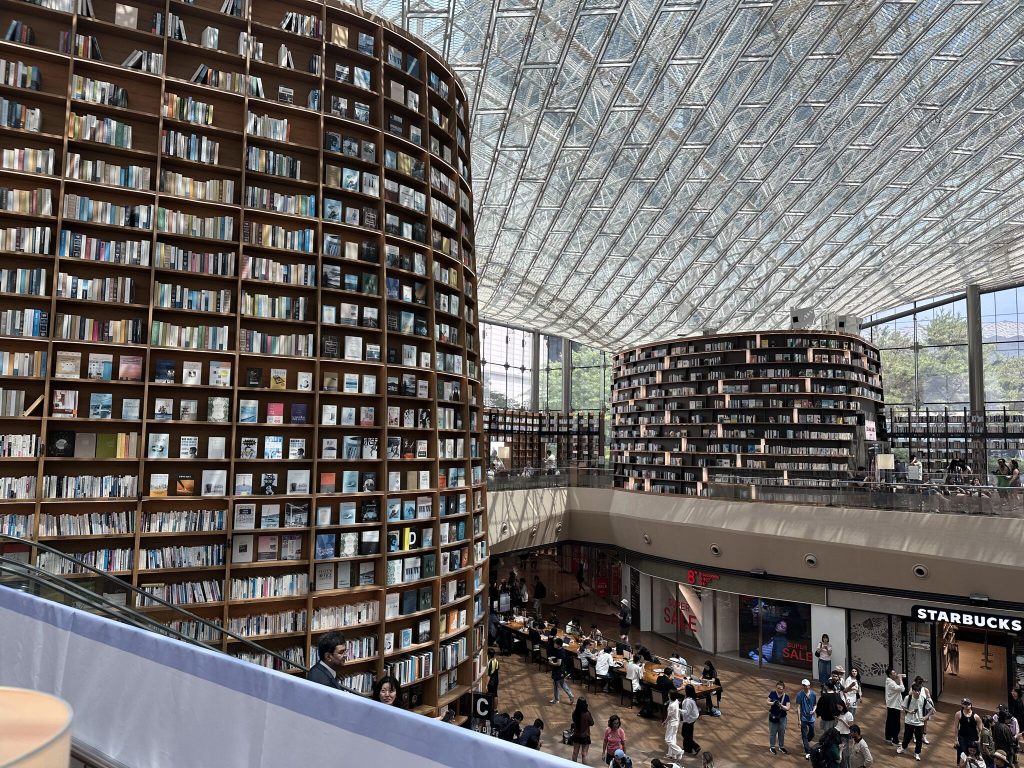
For GBD Innovation Club members, COEX offered a compelling example of how convention infrastructure can support a much broader urban ecosystem. Rather than operating as a standalone venue, it functions as an anchor around which offices, hotels, restaurants, retail, culture and public transport create a destination that remains active throughout the year. The visit reinforced an increasingly important lesson: successful business districts compete not only through office space, but through the quality and diversity of the experiences they offer to businesses, employees, residents and visitors.
Culture as a Driver of Competitiveness
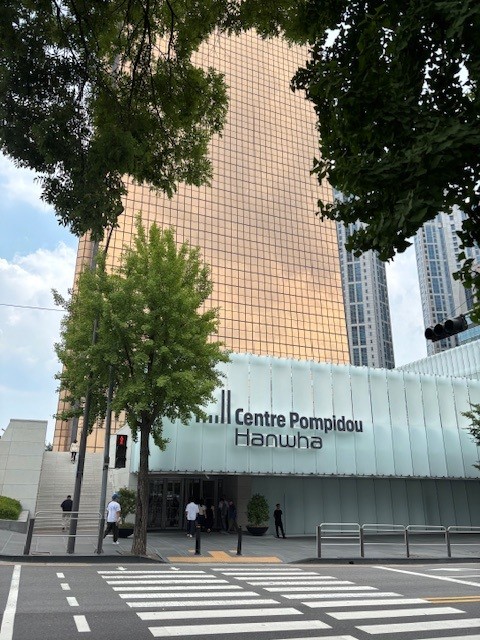
The Roadshow concluded with a visit to the brand-new Centre Pompidou Hanwha, located in Seoul’s iconic 63 Building overlooking the Han River.
Scheduled to become the first permanent branch of the Centre Pompidou in Asia, the project symbolises the growing role of culture in shaping internationally competitive business districts. The visit showed how culture is becoming part of the everyday life of a business district. Places like Centre Pompidou Hanwha are not just museums, they help attract people, bring new energy to the neighbourhood and make the district appealing long after the offices close.
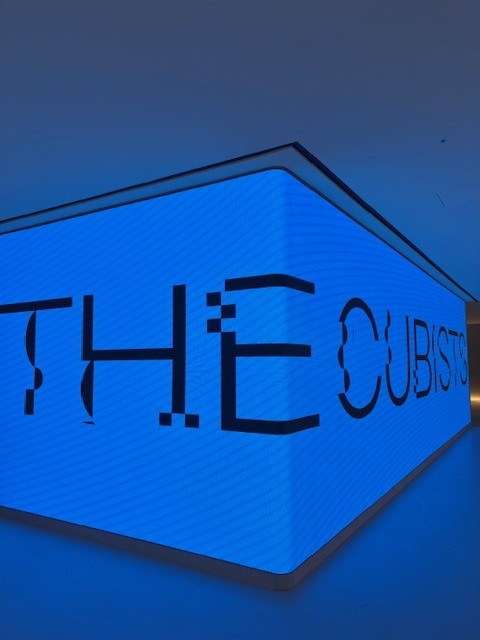
For the delegation, the project reflected a broader trend observed across many leading business districts: culture is becoming an integral part of economic development strategies. Alongside innovation, high-quality public spaces and sustainable mobility, it contributes to creating districts that remain attractive well beyond traditional office hours.
Key Takeaways from Seoul
Over two days of discussions and visits, several themes consistently emerged.
- Think in generations, not projects: Gangnam Vision 2070 demonstrated the value of planning beyond political and investment cycles. Long-term visions provide the consistency needed to guide urban transformation while remaining flexible enough to adapt to future technologies and societal change.
- The Gangnam-style 10-Minute City, a local approach with global relevance: the concept aims to create connected neighbourhoods where workplaces, services, culture, green spaces and everyday amenities are all easily accessible. Designed around Gangnam’s specific needs, it offers a practical model that could help shape future urban standards worldwide.
- Innovation is an ecosystem: innovation is not created by startups alone. It depends on strong connections between entrepreneurs, corporations, investors, universities and public institutions. Business districts have an important role to play in facilitating these connections.
- Global business districts are becoming destinations: the combination of the Global Business Center, COEX, Starfield Library and Centre Pompidou Hanwha illustrates a broader evolution: successful business districts increasingly combine economic activity with culture, public space, retail, hospitality and entertainment to create vibrant places throughout the day and evening.
- Attractiveness goes beyond office space: public spaces, transport, culture and mixed-use development all shape how people experience a business district. Increasingly, what makes a district successful is not just the amount of office space it offers, but whether it is a place where people want to work, visit and spend time.
- Peer learning remains one of the most valuable assets: while each member of GBD Innovation Club represents a different city, governance model and economic context, the discussions confirmed that business districts across the world are increasingly facing the same questions. Sharing experiences allows members not only to exchange ideas but also to identify practical solutions that can be adapted to their own cities.
Learning From One Another
Beyond the presentations and project briefings, the Seoul Roadshow demonstrated the value of bringing together practitioners from different continents to learn directly from one another. Throughout the programme, conversations continued during networking lunches, site visits and informal exchanges, allowing participants to deepen discussions initiated during the official sessions. Comparing approaches from Seoul, Beijing, Paris, London, Toronto, Montréal and Muscat highlighted both the diversity of urban models and the remarkable convergence of the challenges facing global business districts today. These exchanges remain one of the Club’s greatest assets. They transform international dialogue into practical cooperation and create lasting relationships between professionals committed to shaping the urban future.